Why Midlife Weight Gain Is Often More Than Calories
This article is part of my Midlife Health & Hormones series, exploring how stress, recovery, hormones and metabolic health affect resilience and wellbeing during midlife.
One of the most common frustrations I hear from adults in midlife is this:
“I’m eating less than I used to. So why am I gaining weight?”
Especially around the middle.
Many people notice:
• weight creeping up despite “being careful”
• more abdominal fat
• stronger cravings
• worse energy
• feeling puffier or more inflamed
• finding it harder to lose weight than they once did
And often the response they receive is:
“Eat less and move more.”
For many adults, that advice feels both frustrating and deeply unhelpful.
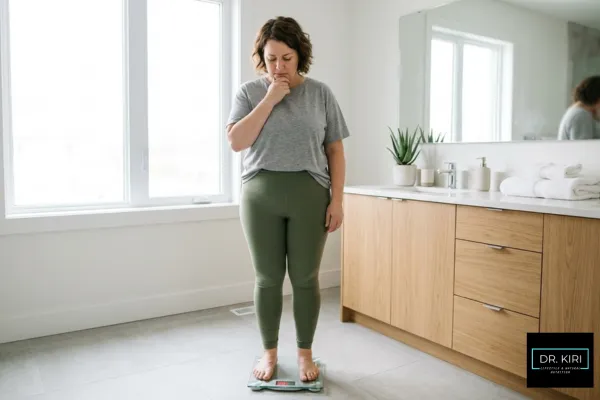
Because midlife weight gain is often far more complex than simple calorie maths alone.
Why midlife changes the picture
Many adults notice they can no longer “push through” the way they once did.
Years of:
• stress
• poor sleep
• dieting
• ultra-processed foods
• unstable blood sugar
• emotional eating
• nervous system overload
• recovery debt
gradually affect how the body regulates:
• appetite
• cravings
• fat storage
• energy
• hormones
• metabolism
Midlife is often the stage where the body starts becoming less tolerant of chronic physiological stress.
Not because the body is broken.
Because it is adapting to years of overload underneath.
Why stress affects weight gain
One thing many people underestimate is how strongly stress affects metabolism.
When the body stays stuck in prolonged “go mode,” stress hormones such as cortisol and adrenaline remain elevated more often than they should.
Over time, chronic stress can influence:
• hunger
• cravings
• blood sugar stability
• fat storage
• sleep quality
• inflammation
• energy regulation
• emotional eating patterns
Particularly around the abdomen.
This is one reason many adults experience:
• stress belly
• midlife belly fat
• worsening cravings
• unstable appetite
• feeling hungrier at night
• relying more heavily on sugar or caffeine
even whilst feeling exhausted.
Why poor sleep changes appetite and metabolism
Sleep affects far more than tiredness.
Poor sleep can disrupt:
• appetite hormones
• blood sugar regulation, meaning energy and cravings become less stable
• recovery
• stress hormones
• hunger signals
• insulin sensitivity, meaning how effectively the body responds to insulin and regulates blood sugar
Poor sleep also affects fat storage and energy regulation.
When adults are chronically sleep deprived, the body often becomes more resistant to releasing stored fat efficiently whilst increasing hunger, cravings and abdominal fat storage.
This is one reason many exhausted adults feel like their metabolism starts working against them rather than with them.
Many adults notice:
• stronger cravings after poor sleep
• needing more caffeine to function
• feeling hungrier throughout the day
• more evening snacking
• worse concentration and impulse control
Especially during stressful times of life.
One poor night occasionally is not usually the problem.
It is the accumulation of years of inconsistent recovery and disrupted sleep that often changes physiology over time.
Why ultra-processed foods affect weight differently
Not all food affects the body in the same way.
This is one reason many adults become frustrated with outdated “calories in, calories out” thinking.
Because the quality of food matters enormously.
Many ultra-processed foods are specifically designed to:
• increase cravings
• reduce fullness
• encourage overeating
• create unstable blood sugar
• override normal appetite regulation
Especially foods high in:
• refined sugar
• artificial fructose
• processed starches
• industrial additives
• highly engineered flavour combinations
These foods often affect:
• hunger
• insulin levels
• blood sugar stability
• cravings
• energy
• fat storage
very differently from real nourishing foods.
This is one reason many adults can feel:
• constantly hungry
• unsatisfied after eating
• trapped in food cravings
• exhausted and gaining weight simultaneously
whilst still blaming themselves underneath.
Why abdominal fat increases in midlife
Many adults specifically notice:
• fat gathering more around the middle
• clothes fitting differently
• increased visceral fat, the deeper abdominal fat stored around organs
• feeling puffier and more inflamed
• finding it harder to lose weight despite trying harder
This is not simply about laziness or lack of discipline.
Stress hormones, poor sleep, insulin resistance, blood sugar instability and long-term metabolic overload, where the body is constantly dealing with stress, unstable energy and poor recovery, can all influence fat storage patterns.
Especially when the body spends years stuck in survival mode.
Why restrictive dieting often backfires
Many adults respond to midlife weight gain by:
• eating less
• skipping meals
• over-exercising
• trying stricter diets
• cutting calories aggressively
Often this worsens the cycle.
Because exhausted stressed bodies frequently respond poorly to more physiological pressure.
People become:
• hungrier
• more tired
• more craving-driven
• more reliant on caffeine
• more likely to binge or emotionally eat later
This is one reason many adults feel trapped in:
restriction → cravings → overeating → guilt → restarting again
for years.
What actually helps?
Usually not punishment.
Usually not obsessively counting calories either.
In my experience, the body responds remarkably well to:
• real nourishing food
• steadier blood sugar
• more protein and fibre
• reducing ultra-processed foods
• better sleep
• movement
• nervous system support
• stress reduction
• regular meals
• more recovery
• sustainable routines overall
The goal is not perfection.
The goal is helping physiology feel safer, steadier and better supported.
The bigger picture
Midlife weight gain is often not simply about willpower or lack of discipline.
Very often it reflects the interaction between:
• stress
• recovery
• blood sugar
• sleep
• hormones
• nervous system overload
• food quality
• long-term metabolic strain
The encouraging part is that the body frequently responds remarkably well once these areas start becoming more consistent.
Less crashing.
Fewer cravings.
More stable energy.
Better concentration.
Improved recovery.
Feeling more like yourself again.
Not perfection.
Not punishment.
Not starving yourself smaller.
Just supporting your physiology in a way modern life often has not allowed for years.
If you recognise yourself in these patterns, you are not alone.
This is exactly the kind of midlife metabolic stress and high-functioning exhaustion I help busy professionals navigate through practical sustainable lifestyle and metabolic health support.
You can learn more about my Midlife Energy Reset sessions here.
Dr Kiri 🌹
The Midlife MOJO Doctor
Support from both sides of the stethoscope.