Why Food Becomes Comfort When You’re Exhausted
This article is part of my Food Psychology & Cravings series, exploring the hidden ways stress, exhaustion, emotions and modern life shape eating patterns, cravings and our relationship with food.
For many adults, food becomes far more than food by the end of the day.
It becomes:
• comfort
• relief
• reward
• distraction
• decompression
• the first pause all day
And because modern life is so relentlessly busy, many people quietly start relying on food to soothe nervous system exhaustion without fully realising it is happening.
Especially high performers.
Especially working parents.
Especially people who spend most of the day:
• multitasking
• caregiving
• problem-solving
• emotionally carrying everyone else
• firefighting constant demands
By evening, the body is often not simply hungry.
It is depleted.
Why exhaustion changes eating behaviour
One thing many people underestimate is how physical stress becomes.
When the nervous system spends all day under pressure, the brain naturally starts seeking:
• comfort
• safety
• quick energy
• stimulation
• emotional relief
That is one reason exhausted adults often find themselves:
• craving sugar
• overeating at night
• emotionally eating
• snacking constantly
• wanting “treat” foods after difficult days
Not because they are weak.
Because the body is trying to recover.
Sometimes the craving is not just for food.
It is for relief.
Why comfort eating often happens at night
Many busy adults override their needs all day long.
-Coffee instead of breakfast.
-Working through lunch.
-Pushing through tiredness.
-Ignoring stress.
-Running on adrenaline.
Then evening arrives.
The house quietens down.
The emails slow down.
People finally stop moving.
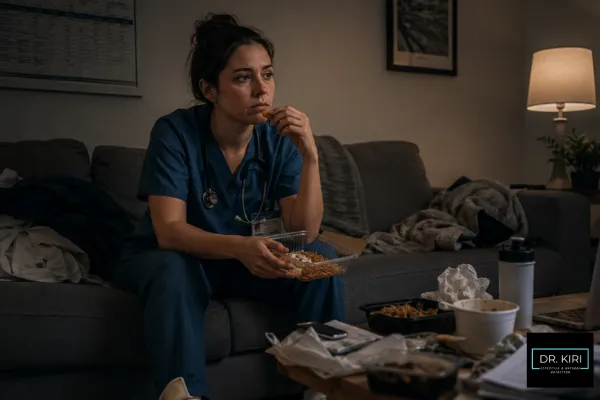
Many adults finally flop on the sofa with snacks, comfort food or a glass of wine and feel their body exhale for the first time all day.
And suddenly the nervous system catches up.
That is often when food cravings become loudest.
Not because someone “failed.”
Because the body finally has enough space to notice how exhausted it actually feels.
Why highly processed foods feel especially comforting
When people are exhausted, stressed or emotionally depleted, the brain naturally becomes more drawn towards foods that provide:
• quick energy
• dopamine reward
• pleasure
• predictability
• comfort
That is why many people do not crave:
salmon and broccoli when overwhelmed.
They crave:
• chocolate
• crisps
• takeaway food
• sugary snacks
• foods associated with comfort and relief
The difficult part is that these foods genuinely do provide temporary soothing.
Which is why comfort eating can feel incredibly powerful during stressful periods.
Why so many adults blame themselves
One of the saddest things I see is how quickly people turn these patterns into personal failure.
“I have no willpower.”
“I’m addicted to food.”
“I’m useless at healthy eating.”
But often the body is responding exactly as an overloaded nervous system would be expected to respond.
I lived this pattern myself for years.
Long shifts.
Working parent life.
Mental overload.
Running on fumes whilst convincing myself I was coping perfectly well.
At the time, grabbing comfort food often felt like the only enjoyable part of the day.
Looking back, I was usually far more exhausted than I realised.
Why restriction often makes comfort eating worse
Many adults respond to emotional or comfort eating by trying to become stricter.
More rules.
More food guilt.
More restriction.
Starting again Monday.
But exhausted nervous systems rarely respond well to more pressure.
In fact, chronic restriction often increases:
• cravings
• food obsession
• emotional eating
• all-or-nothing cycles
• feelings of failure
Because the body starts perceiving more stress and scarcity around food.
This is one reason many people swing repeatedly between:
“being good”
and
“falling off the wagon.”
What actually helps?
Usually not punishment.
In my experience, comfort eating often becomes calmer when the body starts feeling safer, steadier and more supported overall.
1. Eat consistently during the day
Many exhausted adults are unintentionally under-fuelling earlier in the day and then wondering why cravings explode at night.
Regular meals with:
• protein
• fibre
• healthy fats
• steadier blood sugar support
can significantly reduce the intensity of evening cravings.
2. Stop treating rest as something you have to earn
Many high performers delay recovery all day long.
But the nervous system needs regular moments of:
• pause
• recovery
• decompression
• emotional breathing space
not just survival mode from morning until night.
3. Reduce shame around comfort eating
Food is comforting.
Humans are wired that way.
The goal is not perfection or never emotionally eating again.
The goal is understanding what the body may actually be asking for underneath the craving.
4. Support the nervous system alongside nutrition
Sleep.
Hydration.
Movement.
Daylight.
Less overstimulation.
More steadiness.
These things matter far more than people often realise when it comes to cravings and emotional eating patterns.
The bigger picture
Most comfort eating is not about laziness or lack of discipline.
Often it is the nervous system trying to self-soothe under the pressure of:
• stress
• exhaustion
• overstimulation
• emotional depletion
• constant responsibility
The encouraging part is that eating patterns often become much calmer once the body starts feeling consistently supported.
Less food noise.
Less guilt.
Less chaos around eating.
More steadiness.
More trust.
More freedom around food.
Not perfection.
Not punishment.
Not another extreme health reset.
Just helping your physiology and relationship with food feel safer and more sustainable again.
If you recognise yourself in these patterns, you are not alone.
This is exactly the kind of food psychology, metabolic stress and high-functioning exhaustion I help busy professionals navigate through practical, sustainable lifestyle and metabolic health support.
You can learn more about my Midlife Energy Reset sessions here.
Dr Kiri 🌹
The Midlife MOJO Doctor
Support from both sides of the stethoscope.