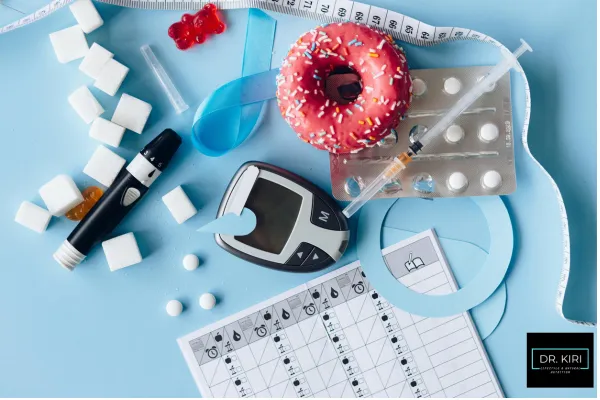
The Hidden Signs of Insulin Resistance
This article is part of my Blood Sugar & Metabolic Health series, exploring the hidden ways stress, nutrition and modern life affect energy, cravings and metabolic health in busy professionals.
Most people assume insulin resistance appears suddenly.
It usually does not.
In reality, insulin resistance often develops quietly over years whilst people continue functioning externally.
That is one reason so many adults miss the early signs.
They assume:
• they are “just getting older”
• stress is catching up with them
• everybody feels exhausted
• needing caffeine is normal
• weight gain is inevitable in midlife
• cravings are simply lack of willpower
But many of these symptoms can actually be signs the body is struggling to regulate blood sugar, energy and cravings properly underneath.
What is insulin resistance?
Insulin is a hormone that helps move glucose from the bloodstream into cells to be used for energy.
When the body becomes more insulin resistant, cells respond less effectively to insulin over time.
The body then has to produce more insulin to try to keep blood sugar stable.
This can affect:
• energy
• cravings
• hunger
• fat storage
• inflammation
• concentration
• metabolic health overall
Importantly, insulin resistance often develops long before type 2 diabetes appears.
Which means many adults are living with early metabolic dysfunction, where the body starts struggling to regulate energy, blood sugar and cravings properly, for years without realising it.
The hidden signs of insulin resistance
Many symptoms initially seem unrelated.
People often notice:
• worsening energy crashes
• stronger sugar cravings
• afternoon fatigue
• brain fog
• poor concentration
• feeling hungry quickly after eating
• needing caffeine to function
• irritability when hungry
• feeling “hangry”
• abdominal weight gain
• more visceral fat around the middle
• finding it harder to lose weight
• poorer recovery after stressful periods
• sleep becoming less restorative
• blood pressure creeping up
Individually, these symptoms may not seem dramatic.
Together, they often tell a much bigger metabolic story.
Why insulin resistance often feels confusing
Many adults feel deeply confused by what is happening in their body.
They think:
“How can I be exhausted and gaining weight?”
“Why am I craving sugar constantly?”
“Why is my energy so bad?”
“Why can’t I lose weight anymore?”
Especially when they are:
• busy
• stressed
• under-slept
• skipping meals
• relying on convenience food
• running on caffeine and adrenaline
The difficult part is that chronic stress and unstable blood sugar often push physiology further in the same direction.
Over time, many adults become trapped in cycles of:
crash → crave → caffeine or sugar → temporary lift → another crash
whilst assuming they simply need more discipline.
Why cravings and insulin resistance are often connected
One thing many people underestimate is how strongly blood sugar instability can influence cravings.
When energy regulation becomes less stable, people often experience:
• stronger sugar cravings
• needing snacks more frequently
• emotional eating
• afternoon crashes
• hunger shortly after eating
• constant thoughts about food
Especially during stressful periods.
This is not simply about weakness or lack of willpower.
The body is often trying to compensate for unstable energy regulation underneath.
Why abdominal weight gain matters metabolically
Not all weight gain means insulin resistance.
But increasing abdominal weight gain and more visceral fat around the middle can sometimes be important metabolic clues.
Insulin resistance and visceral fat can also increase the risk of developing conditions such as fatty liver disease, often long before people realise their metabolic health is being affected underneath.
Especially when combined with:
• worsening cravings
• unstable energy
• fatigue
• poor sleep
• blood pressure changes
• feeling inflamed or puffy
• difficulty losing weight despite trying hard
Many adults blame themselves repeatedly whilst missing the physiology underneath the pattern.
Why busy professionals often normalise the symptoms
One thing I notice frequently is how many capable intelligent adults adapt gradually to feeling unwell.
“I’ve always needed coffee.”
“That’s just stress.”
“I’m just tired.”
“This is normal in midlife.”
I used to think this was normal too.
Especially during demanding times in life.
Long shifts.
Working parent life.
Mental overload.
Running on caffeine, sugar and adrenaline whilst telling myself I was coping perfectly well.
Looking back, my body had been signalling overload long before I properly acknowledged it.
Why insulin resistance often develops quietly
Insulin resistance is rarely about one single food or one bad week.
Usually it develops gradually through combinations of:
• chronic stress
• poor sleep
• unstable eating patterns
• ultra-processed foods
• repeated blood sugar swings
• nervous system overload
• inactivity
• chronic overstimulation
• long-term exhaustion
This is one reason early metabolic dysfunction, where the body gradually becomes less able to regulate energy and blood sugar effectively, often feels like a quiet drift rather than a dramatic collapse.
What actually helps support insulin sensitivity?
Usually not punishment.
Usually not another extreme diet.
In my experience, the body responds remarkably well to:
• steadier blood sugar
• regular nourishment
• more protein and fibre
• reducing ultra-processed foods
• movement
• better sleep
• lower stress load
• nervous system support
• hydration
• more consistent routines overall
Small sustainable changes often improve:
• energy
• cravings
• concentration
• sleep
• metabolic stability
• recovery
far more than people expect.
The bigger picture
Most people do not suddenly become insulin resistant overnight.
Usually the body adapts quietly to years of:
• stress
• overstimulation
• under-recovery
• unstable nourishment
• poor sleep
• chronic rushing
• nervous system overload
The encouraging part is that the body often responds remarkably well once it is consistently supported properly.
Less crashing.
Fewer cravings.
More stable energy.
Better concentration.
Improved recovery.
Feeling more like yourself again.
Not perfection.
Not punishment.
Not another extreme health overhaul.
Just helping your physiology work with you again instead of constantly fighting to keep up.
If you recognise yourself in these patterns, you are not alone.
This is exactly the kind of metabolic instability and high-functioning exhaustion I help busy professionals navigate through practical, sustainable lifestyle and metabolic health support.
You can learn more about my Midlife Energy Reset sessions here.
Dr Kiri 🌹
The Midlife MOJO Doctor
Support from both sides of the stethoscope.