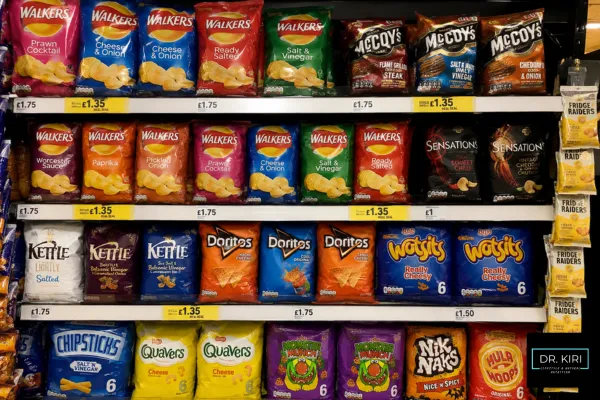
Why Ultra-Processed Foods Are So Hard to Stop Eating?
This article is part of my Food Psychology & Cravings series, exploring the hidden ways stress, exhaustion, emotions and modern life shape eating patterns, cravings and our relationship with food.
Many people blame themselves for struggling around ultra-processed foods.
They assume:
• they lack discipline
• they are addicted to food
• they have no willpower
• they just need to “try harder”
But modern ultra-processed foods are not simply about taste or convenience.
They are specifically designed to keep people eating.
And when someone is already stressed, exhausted, overstimulated or running on fumes, resisting them becomes even harder.
Especially for busy adults trying to juggle:
• work
• parenting
• deadlines
• caregiving
• mental overload
• constant rushing
Because convenience foods become incredibly appealing when you are:
• tired
• stressed
• hungry
• emotionally depleted
• short on time
• feeling “hangry”
• trying to feed yourself and your family quickly
That is not weakness.
That is physiology meeting modern food engineering.
What are ultra-processed foods?
Ultra-processed foods are foods that have usually been heavily altered from their original form and often contain combinations of:
• refined carbohydrates
• sugars
• industrial fats
• flavour enhancers
• additives
• artificial ingredients
• highly rewarding textures and flavours
Many are designed to be:
• cheap
• convenient
• long-lasting
• hyper-palatable
• easy to overconsume
This does not mean someone can never eat them.
The problem is the amount modern adults are surrounded by them whilst also living under chronic stress and exhaustion.
Why ultra-processed foods feel so rewarding when you are exhausted
One thing many people underestimate is how much stress changes food behaviour.
When the nervous system is overloaded, the brain naturally starts seeking:
• quick energy
• comfort
• stimulation
• dopamine reward
• emotional relief
That is one reason exhausted adults often find themselves reaching for:
• crisps
• chocolate
• takeaway foods
• sugary snacks
• fast convenience foods
especially after stressful days.
Not because they are weak.
Because the body is trying to recover quickly.
Sometimes the craving is not just for food.
It is for relief.
Why convenience matters so much
Many health conversations completely ignore real life.
At the end of a long stressful day, most exhausted adults are not calmly spiralising courgettes whilst listening to a wellness podcast.
They are trying to survive the evening.
Convenience foods become incredibly difficult to resist when you are:
• rushing
• mentally overloaded
• emotionally depleted
• running on fumes
• trying to feed yourself and your family quickly
Especially when blood sugar has already been unstable all day.
The brain will almost always favour:
fast
easy
rewarding
predictable
when energy and stress tolerance are low.
That is normal human physiology.
Why ultra-processed foods often increase cravings
Many ultra-processed foods digest rapidly and can create:
• blood sugar swings
• quick energy spikes
• crashes afterwards
• increased hunger
• more cravings later
Over time, many people also notice:
• more visceral fat around the middle
• worsening energy crashes
• feeling increasingly inflamed or sluggish
• stronger cravings
• finding it harder to lose weight
despite constantly feeling busy and overstimulated.
Which can leave people stuck in cycles of:
eat → spike → crash → crave → repeat
Many adults then blame themselves for lacking discipline when the physiology underneath is pushing strongly towards seeking more quick energy.
This is one reason people often experience:
• afternoon crashes
• evening cravings
• emotional eating
• constant snacking
• feeling out of control around food
especially during stressful periods.
Why stressed adults are especially vulnerable
Stress affects:
• appetite
• food choices
• cravings
• blood sugar regulation
• impulse control
• energy regulation
When people are:
• sleeping badly
• overwhelmed
• overstimulated
• emotionally exhausted
• constantly “on”
the brain becomes far more vulnerable to highly rewarding foods.
I lived this pattern myself for years.
Long shifts.
Working parent life.
Mental overload.
Running on caffeine, adrenaline and quick convenience food whilst convincing myself I was coping perfectly well.
At the time, grabbing processed food often felt like survival rather than choice.
Looking back, my body was usually exhausted long before I acknowledged it properly.
Why shame around food rarely helps
One of the biggest problems with modern nutrition culture is how much shame people carry around food.
Many adults feel:
• guilty
• embarrassed
• frustrated
• angry with themselves
for struggling around ultra-processed foods.
But self-blame rarely improves eating patterns long term.
Understanding the environment, physiology and stress underneath the behaviour is usually far more useful.
What actually helps?
Usually not extreme restriction or trying to become “perfect.”
In my experience, the body responds far better to:
• steadier meals
• more protein and fibre
• better sleep
• reduced stress load
• hydration
• less food guilt
• more realistic routines
• supporting the nervous system overall
1. Make nourishing food easier, not harder
Exhausted brains choose convenience.
So making healthier choices easier and more accessible matters enormously.
2. Stabilise blood sugar where possible
Regular meals containing:
• protein
• fibre
• healthy fats
often reduce intense cravings significantly.
3. Reduce all-or-nothing thinking
Many people swing between:
“being good”
and
“falling off the wagon.”
That cycle often creates more food chaos, not less.
4. Support the exhausted nervous system underneath
Many food struggles improve when:
• stress reduces
• sleep improves
• recovery increases
• stimulation decreases
• the body feels safer overall
Because often the issue is not just the food.
It is the overloaded physiology underneath it.
The bigger picture
Ultra-processed foods are not difficult to resist simply because people lack willpower.
They become especially powerful when modern food environments collide with:
• stress
• exhaustion
• blood sugar swings
• emotional depletion
• nervous system overload
• constant rushing
The encouraging part is that eating patterns often become calmer once the body starts feeling more supported consistently.
Less food noise.
Less chaos around eating.
Fewer cravings.
More steadiness.
More freedom around food.
Not perfection.
Not punishment.
Not another extreme health overhaul.
Just helping your physiology work with you again instead of constantly fighting to keep up.
If you recognise yourself in these patterns, you are not alone.
This is exactly the kind of food psychology, metabolic stress and high-functioning exhaustion I help busy professionals navigate through practical, sustainable lifestyle and metabolic health support.
You can learn more about my Midlife Energy Reset sessions here.
Dr Kiri 🌹
The Midlife MOJO Doctor
Support from both sides of the stethoscope.